| Act I, Scene ii "Hamlet: Fie on't! ah fie! 'tis an unweeded garden, Act II, Scene ii "Hamlet: O Jephthah, judge of Israel, what a treasure hadst thou!" Act III, Scene iii "Claudius: O, my offence is rank it smells to heaven; |
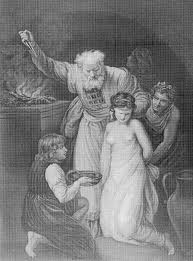

The purpose of the first biblical allusion is to talk about the marriage Gertrude hastily made as soiling Denmark just as Even did in the Garden of Eden. Hamlet thought of Denmark as an ideal place to live before this sin was committed. The second allusion is to Jephthah. Jephthah was a biblical character who sacrificed his own daughter to God. Hamlet's making a statement, to Polonius' face, about his treatment of his daughter, Ophelia, whom he has been using like bait to spy on Hamlet. Polonius completely misses the reference though just thinking it's Hamlet admitting his obsession to his daughter. Finally, The third allusion is to Cain who kills his own brother for the crown in the bible. When Claudius says this he is admitting to himself his wrong-doings, comparing himself to Cain because he did the same thing. |
