Act I, Scene v "Ghost: Now, Hamlet, hear. 'Tis given out that, sleeping in my orchard, A serpent stung me. So the whole ear of Denmark Is by a forgèd process of my death Rankly abused. But know, thou noble youth, The serpent that did sting thy father’s life Now wears his crown." Act II, Scene i "Polonius: Come, go with me. I will go seek the king. This is the very ecstasy of love, Whose violent property fordoes itself And leads the will to desperate undertakings As oft as any passion under heaven That does afflict our natures. I am sorry. What, have you given him any hard words of late?" |
|

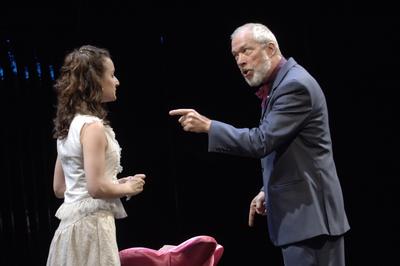
Shakespeare used irony, specifically dramatic irony not only to keep the audience involved and enthralled with the story, but to give his themes more depths and relevance within his works. In Hamlet, dramatic irony is everywhere, from Hamlets plot to seem insane and its reception by his parents and Ophelia, to the accidental murder of Polonius. In the first quote there is dramatic irony in that the supposed to be noble King of Denmark got the crown by murdering his own brother. It's even more ironic to the audience since only they and Hamlet know. In the second quote Polonius tells Ophelia that Hamlet's love for her has driven him mad (the very ecstasy of love) when in fact he isn't mad at all, it is just all a part of his plan to appear mad. |
