Dialogue

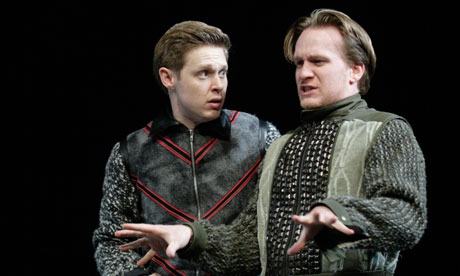
 A photograph of Rosencrantz and Guildenstern having a conversation.

What is dialoge?

A written composition in which two or more characters are represented as conversing

 Act I, Scene iii

                "Polonius: To thine own self be true, 

                              And it must follow as the night the day 
                              Thou canst not then be false to any man."

            "King:    For what we know must be, and is as common 
                         As any the most vulgar thing to sense - 
                        Why should we in our peevish opposition 
                        Take it to heart? Fie, 'tis a fault to heaven, 
                        A fault against the dead, a fault to nature, 
                        To reason most absurd; whose common theme 
                        Is death of fathers, and who still hath cried 
                        From the first corse till he that died today,
                        'This must be so.'"
Those two quotes are merely a spec of the dialogue in this play. The importance of dialogue in this play is so great I cannot begin to explain it all. Through the dialogue Shakespeare conveys the plot, makes all the characters round, gives the play wit, etc. The dialogue is not modern and that makes it harder to understand for us today, but it is written with such intelligence that even today readers and viewers of this play can understand it. The first quote I used is actually a very popular piece of dialogue that many people quote today. This piece from Polonius to his son is about being yourself, living with the right morals, and how to be a good person. The second quote I used is an example of how the dialogue Shakespeare chose conveys characterization. 


Make a Free Website with Yola.